
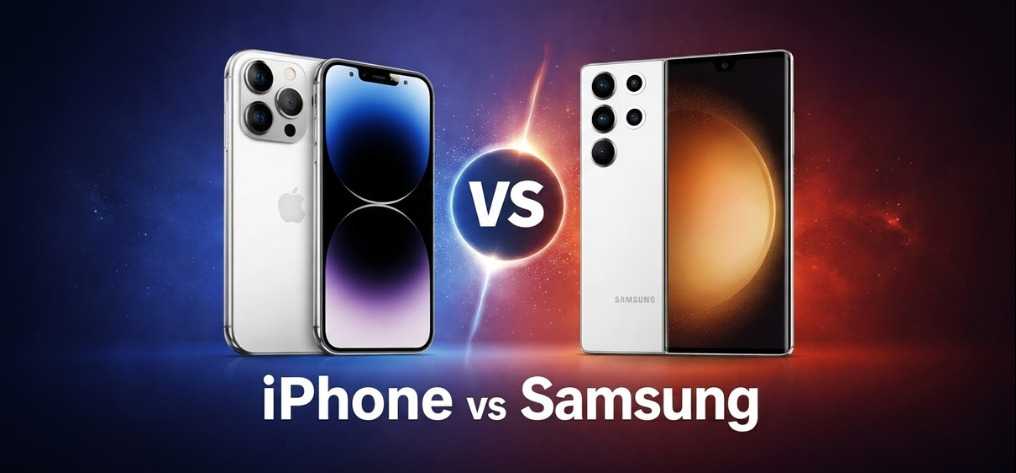
The smartphone market in the United States is dominated by two giants: Apple’s iPhone and Samsung Galaxy smartphones. Both brands represent the pinnacle of innovation, performance, ecosystem integration, and premium smartphone design. Consumers often face a challenging decision when choosing between these two technology leaders.
In this comprehensive guide, we present a deep, feature-by-feature comparison of iPhone vs Samsung in the US market, analyzing everything from design, display technology, performance, camera systems, software ecosystem, battery life, pricing, security, and long-term value. Our goal is to provide the most detailed comparison available, helping buyers confidently decide which smartphone platform best fits their needs.
Understanding the iPhone vs Samsung Rivalry
The competition between Apple and Samsung has shaped the modern smartphone industry. While Apple focuses on tight hardware–software integration, Samsung offers diversity, customization, and cutting-edge display innovation.
Key differences between the brands include:
-
iPhone: Premium ecosystem, optimized performance, long software support
-
Samsung: Wide device range, powerful hardware innovation, customization flexibility
-
iOS vs Android: Closed vs open software environments
-
Hardware design philosophy: Minimalist vs feature-rich
Both brands dominate the US smartphone market, accounting for the majority of high-end device sales.
Design and Build Quality Comparison
Apple iPhone Design Philosophy
Apple focuses heavily on minimalist industrial design, using materials such as surgical-grade stainless steel, aerospace aluminum, and Ceramic Shield glass.
Key iPhone design strengths:
-
Premium materials
-
Seamless build quality
-
Balanced weight distribution
-
Iconic aesthetic consistency
Recent iPhones feature:
-
Flat edges
-
Durable glass protection
-
IP68 water resistance
-
MagSafe magnetic accessory system
Apple’s design strategy emphasizes timeless elegance and durability.
Samsung Galaxy Design Innovation
Samsung focuses on cutting-edge design experimentation and futuristic aesthetics.
Highlights include:
-
Curved displays
-
Ultra-thin bezels
-
Glass and aluminum premium builds
-
Foldable smartphone designs
Samsung devices such as the Galaxy S series and Galaxy Z Fold series demonstrate engineering innovation unmatched in the smartphone industry.
Samsung also offers:
-
Multiple form factors
-
Large display options
-
Lightweight premium materials
This variety appeals to users who prefer design flexibility and unique hardware experiences.
Display Technology: Apple Super Retina vs Samsung AMOLED
Display technology is one area where Samsung historically leads the industry, even supplying display panels for Apple devices.
iPhone Display Technology
Apple uses Super Retina XDR OLED displays, known for:
-
Color accuracy
-
True Tone technology
-
HDR support
-
High brightness levels
Key advantages include:
-
Industry-leading color calibration
-
Excellent HDR video playback
-
Smooth ProMotion 120Hz refresh rates
Apple prioritizes visual consistency and cinematic accuracy.
Samsung Display Technology
Samsung’s Dynamic AMOLED displays are considered the best smartphone displays in the world.
Features include:
-
High brightness levels
-
Adaptive refresh rates up to 120Hz
-
Deep contrast ratios
-
Edge-to-edge screen design
Samsung displays often deliver:
-
More vivid colors
-
Higher peak brightness
-
Larger screen sizes
Samsung also leads in foldable display technology, giving it a significant innovation advantage.
Performance and Processing Power
iPhone Performance (Apple Silicon)
Apple designs its own processors, such as the A-series chips, which deliver industry-leading performance and efficiency.
Advantages of Apple chips:
-
Superior single-core performance
-
Optimized iOS performance
-
Energy efficiency
-
Long-term software support
Because Apple controls both hardware and software, iPhones maintain consistent speed and stability for years.
Samsung Performance (Snapdragon / Exynos)
Samsung smartphones use powerful processors such as:
-
Qualcomm Snapdragon chips
-
Samsung Exynos processors
High-end Galaxy devices deliver:
-
Strong multi-core performance
-
Advanced AI capabilities
-
Excellent gaming performance
Samsung often leads in:
-
RAM capacity
-
Storage options
-
Hardware versatility
For gaming and multitasking, Samsung devices provide exceptional hardware power.
Camera Systems: Apple vs Samsung Photography
Smartphone cameras are one of the most important buying factors.
iPhone Camera Strengths
Apple cameras focus on realistic color reproduction and consistent image quality.
Key features include:
-
Advanced computational photography
-
Smart HDR processing
-
Cinematic video mode
-
Industry-leading video recording
iPhones dominate in:
-
Video quality
-
Color accuracy
-
Portrait photography
Content creators often prefer iPhones because of reliable camera performance across all lighting conditions.
Samsung Camera Strengths
Samsung focuses on high-resolution photography and zoom technology.
Advantages include:
-
High megapixel sensors
-
Space Zoom technology
-
Advanced night photography
-
AI photo enhancement
Samsung excels in:
-
Zoom photography
-
Ultra-wide shots
-
High-detail images
Samsung cameras provide more photographic versatility.
Operating System: iOS vs Android Experience
iOS (Apple Ecosystem)
Apple’s iOS operating system delivers a seamless and secure user experience.
Benefits include:
-
Smooth interface
-
Long-term updates
-
Secure app ecosystem
-
Deep integration with Apple devices
The Apple ecosystem connects:
-
iPhone
-
Mac
-
Apple Watch
-
iPad
-
AirPods
This integration allows features like:
-
AirDrop
-
iMessage
-
Continuity
-
Universal clipboard
Android (Samsung One UI)
Samsung uses Android with One UI, offering customization and flexibility.
Advantages include:
-
Advanced multitasking
-
Custom themes
-
Flexible widgets
-
File system access
Samsung also provides:
-
Samsung DeX desktop mode
-
Split-screen multitasking
-
Customization features
Android users benefit from greater control and personalization.
Battery Life and Charging Technology
Battery performance varies depending on usage patterns and device models.
iPhone Battery Advantages
Apple prioritizes power efficiency through software optimization.
Benefits include:
-
Smart battery management
-
Efficient processors
-
Reliable all-day battery life
Apple also supports:
-
MagSafe wireless charging
-
Fast charging capabilities
Samsung Battery Advantages
Samsung smartphones often include larger battery capacities.
Features include:
-
Super Fast Charging
-
Wireless charging
-
Reverse wireless charging
Samsung’s charging speeds are typically faster than Apple’s.
Security and Privacy Comparison
Security is a major differentiator between the platforms.
iPhone Security
Apple focuses heavily on privacy-first design.
Security features include:
-
Face ID biometric authentication
-
App Tracking Transparency
-
Secure enclave hardware encryption
-
Strict App Store policies
Apple is widely recognized for leading smartphone privacy protection.
Samsung Security
Samsung devices use Samsung Knox security platform.
Security capabilities include:
-
Hardware-level protection
-
Secure Folder feature
-
Biometric authentication
-
Enterprise-grade security
Samsung Knox is widely used in corporate environments.
Pricing and Value in the US Market
Pricing plays a significant role in purchasing decisions.
iPhone Pricing
Apple typically offers premium pricing across all models.
Benefits include:
-
High resale value
-
Long software support
-
Premium ecosystem integration
iPhones often maintain strong resale value even after several years.
Samsung Pricing
Samsung offers a wider range of devices, including:
-
Flagship phones
-
Mid-range smartphones
-
Budget devices
Advantages include:
-
More price options
-
Frequent discounts
-
Trade-in programs
Consumers looking for value and variety often prefer Samsung.
iPhone vs Samsung: Quick Comparison Table
| Feature | iPhone | Samsung |
|---|---|---|
| Operating System | iOS | Android (One UI) |
| Display | Super Retina XDR | Dynamic AMOLED |
| Performance | Apple A-series chips | Snapdragon / Exynos |
| Camera Strength | Video quality | Zoom photography |
| Customization | Limited | Extensive |
| Ecosystem | Apple devices | Cross-platform |
| Battery | Efficient optimization | Larger capacity |
| Pricing | Premium | Wide price range |
Which Smartphone Should You Choose?
Choosing between iPhone and Samsung in the US market ultimately depends on personal preferences and priorities.
Choose iPhone if you want:
-
Seamless ecosystem integration
-
Long-term software updates
-
Industry-leading video recording
-
Strong privacy protections
Choose Samsung if you want:
-
Cutting-edge hardware innovation
-
Customization and flexibility
-
Advanced camera zoom technology
-
Larger display options
Both brands deliver exceptional flagship smartphones, ensuring consumers always receive top-tier technology and performance.
FAQs
1. Which phone brand is better in the US, iPhone or Samsung?
Both brands offer premium smartphones, but iPhones dominate the US market due to ecosystem integration.
2. Are Samsung cameras better than iPhone cameras?
Samsung excels in zoom and high-resolution photos, while iPhone leads in video recording quality.
3. Do iPhones last longer than Samsung phones?
iPhones often receive longer software updates, helping them remain usable longer.
4. Which phone has better battery life?
Samsung phones typically have larger batteries, but Apple devices use efficient optimization.
5. Are Samsung phones cheaper than iPhones?
Yes, Samsung offers budget, mid-range, and flagship devices, while iPhones focus on premium pricing.
6. Which phone is better for gaming?
Both are excellent, but Samsung often includes higher RAM and advanced cooling systems.
7. Is Android more customizable than iOS?
Yes, Android allows extensive customization and personalization.
8. Do iPhones have better security?
Apple is widely recognized for strong privacy protections.
9. Which phone has better displays?
Samsung generally leads in display technology and brightness.
10. Are iPhones easier to use?
Many users find iOS simpler and more intuitive.
11. Which phone brand has better resale value?
iPhones maintain higher resale value.
12. Do Samsung phones support expandable storage?
Some Samsung devices include microSD support, while iPhones do not.
13. Are Samsung phones better for photography?
Samsung excels in zoom and detailed photos.
14. Which phone has better software updates?
Apple provides longer update cycles.
15. Which phone integrates better with other devices?
Apple devices integrate seamlessly within the Apple ecosystem.
16. Are Samsung phones good for multitasking?
Yes, Samsung offers advanced multitasking features.
17. Which phone is better for video creators?
iPhones dominate mobile video production.
18. Which phone charges faster?
Samsung phones typically support faster charging speeds.
19. Do iPhones have better apps?
Some apps launch earlier on iOS platforms.
20. Which phone is better for business use?
Both are strong, but Samsung offers enterprise security via Knox.
21. Are foldable phones available from Apple?
Currently, Samsung leads the foldable smartphone market.
22. Which phone has more features?
Samsung devices generally include more hardware features.
23. Are iPhones more secure than Android phones?
Apple emphasizes strict app store security policies.
24. Which brand innovates faster?
Samsung frequently introduces new hardware innovations first.
25. Which smartphone should beginners choose?
iPhones are often easier for first-time smartphone users.
For more information and to start using Deonus.com, visit our official website and download the app to stay updated on the best deals and offers. With Deonus.com, you can ensure that every shopping experience is not just an opportunity to shop but an opportunity to save big.