
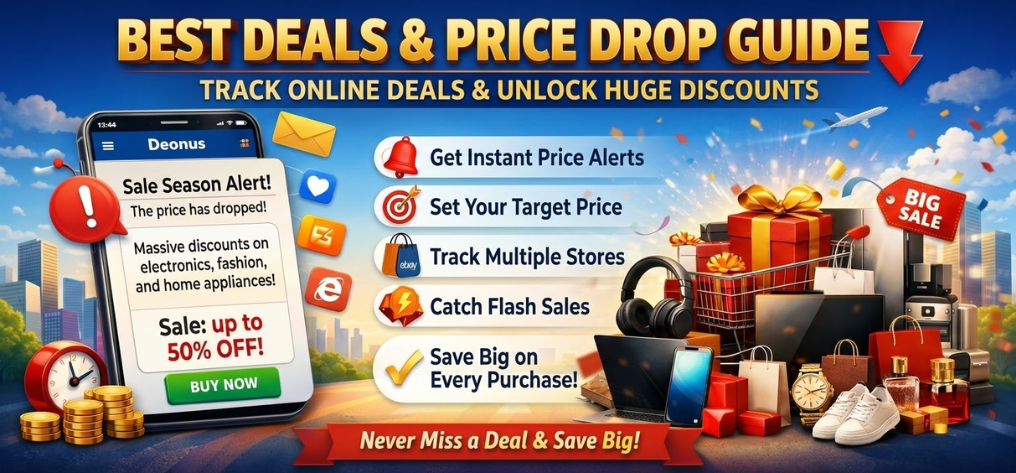
Online shopping has transformed the way consumers purchase products, but paying the lowest possible price still requires strategy. Prices fluctuate constantly across e-commerce platforms, and the difference between buying today and waiting a few days could mean saving a significant amount of money. This is where price drop alerts Guide become a powerful tool for modern shoppers.
In this comprehensive guide, we explain how price drop alerts work, why they are essential for smart online shopping, and how shoppers can leverage them to maximize savings, monitor deals, and make informed purchasing decisions.
Understanding Price Drop Alerts
Price drop alerts are automated notifications that inform shoppers whenever the price of a product decreases. Instead of checking product pages repeatedly, users simply track an item and receive alerts when its price falls below a specific threshold.
These alerts are typically delivered through:
-
Mobile app notifications
-
Email alerts
-
Browser notifications
-
SMS notifications
-
Dashboard updates within deal-tracking platforms
The purpose is simple: help consumers purchase products at the best possible price without constant monitoring.
Why Prices Change Frequently
Product prices online change due to several factors:
-
Dynamic pricing algorithms
-
Seasonal sales and promotions
-
Inventory adjustments
-
Competitor pricing strategies
-
Flash sales and limited-time discounts
-
Clearance and stock liquidation
Price tracking tools monitor these changes continuously and instantly notify users when savings opportunities appear.
Why Price Drop Alerts Are Essential for Smart Shopping
Price alerts are not just convenient; they are one of the most effective ways to save money online. Shoppers who use them gain a clear advantage over traditional buyers.
1. Eliminate Guesswork
Without alerts, shoppers must guess whether a price is good or whether it will drop later. Price monitoring tools provide real data, removing uncertainty.
2. Save Time
Instead of manually checking websites, automated tracking handles the monitoring process.
3. Prevent Overpaying
Alerts ensure you never buy a product at a higher price when a discount appears shortly after.
4. Track Multiple Products Simultaneously
You can monitor dozens or even hundreds of products across different categories.
5. Catch Limited-Time Deals
Many discounts last only hours. Real-time alerts allow users to act quickly before deals disappear.
How Price Drop Alerts Work
Price alert systems operate using advanced price monitoring technology that scans retailer websites for price updates.
Step-by-Step Process
-
User selects a product
-
Tracking software monitors price changes
-
Price history is recorded
-
Alert triggers when price drops
-
User receives notification instantly
This system allows shoppers to buy at the optimal moment instead of guessing when to purchase.
Key Features of an Effective Price Drop Alert System
Not all price tracking tools are equal. The most effective systems provide powerful monitoring features that give users the greatest advantage.
Real-Time Price Monitoring
Continuous scanning ensures that users never miss sudden discounts or flash sales.
Historical Price Data
Access to price history allows shoppers to determine whether the current price is truly a good deal.
Custom Alert Thresholds
Users can set a target price and receive alerts only when the product reaches that level.
Multi-Retailer Tracking
The ability to monitor prices across multiple stores and marketplaces ensures the lowest price is found.
Deal Aggregation
Some platforms also highlight trending deals and major discounts automatically.
Products That Benefit Most from Price Drop Alerts
Certain product categories experience frequent price fluctuations, making them ideal candidates for price monitoring.
Electronics
-
Smartphones
-
Laptops
-
Smart TVs
-
Headphones
-
Gaming consoles
Electronics often see rapid discounts during sales events.
Home Appliances
-
Refrigerators
-
Washing machines
-
Air conditioners
-
Kitchen appliances
Large appliances often receive seasonal promotions and festival discounts.
Fashion and Accessories
Clothing brands regularly adjust pricing during clearance sales and seasonal transitions.
Travel and Lifestyle Products
Travel gear, gadgets, and accessories frequently drop in price during holiday promotions.
Major Sales Events That Trigger Price Drops
Price alerts become especially valuable during major online sale events.
Festival Sales
In many regions, e-commerce platforms offer massive discounts during festivals.
Examples include:
-
Diwali sales
-
Black Friday deals
-
Cyber Monday discounts
-
New Year promotions
Seasonal Clearance Sales
Retailers clear inventory during:
-
End-of-season sales
-
Mid-year promotions
-
Stock clearance events
Flash Sales
These short-term promotions can last only a few hours, making alerts critical.
Benefits of Using Automated Price Tracking Tools
Modern shoppers increasingly rely on automated deal platforms because they simplify the entire process of finding discounts.
Key Advantages
-
Automated deal discovery
-
Accurate price tracking
-
Instant notifications
-
Improved purchase timing
-
Centralized deal management
These features allow shoppers to save money without spending time searching for deals manually.
How to Set Up Price Drop Alerts Effectively
To maximize savings, shoppers should follow a strategic approach.
1. Track Products Early
Add items to your watchlist before major sales events begin.
2. Set Realistic Target Prices
Analyze past price history and determine a reasonable discount target.
3. Monitor Multiple Retailers
Prices vary widely across platforms.
4. Enable Instant Notifications
Push notifications ensure you never miss a deal.
5. Act Quickly When Alerts Trigger
Popular deals often sell out quickly.
Common Mistakes to Avoid When Using Price Alerts
Even experienced shoppers sometimes make mistakes when tracking deals.
Mistake 1: Waiting Too Long
Prices may drop briefly and then increase again.
Mistake 2: Ignoring Historical Price Data
Not every discount represents the lowest price ever offered.
Mistake 3: Tracking Too Few Products
Tracking more products increases your chances of finding unexpected discounts.
Mistake 4: Disabling Notifications
Missing alerts can mean missing limited-time deals.
Price Drop Alerts vs Manual Deal Hunting
| Feature | Price Drop Alerts | Manual Checking |
|---|---|---|
| Time Required | Very Low | High |
| Accuracy | High | Low |
| Deal Discovery | Automated | Manual |
| Missed Deals | Rare | Common |
| Efficiency | Excellent | Poor |
This comparison shows why automated price monitoring is far superior to manual deal searching.
Advanced Price Alert Strategies Used by Smart Shoppers
Experienced online shoppers go beyond basic price tracking.
Strategy 1: Track Before Product Launch
Prices often drop shortly after product launches.
Strategy 2: Watch Competing Retailers
Retailers frequently match or beat competitor pricing.
Strategy 3: Combine Alerts with Coupons
Stacking discounts with coupons creates maximum savings.
Strategy 4: Monitor Bundled Deals
Sometimes bundles provide better value than individual purchases.
Future of Price Drop Alerts in Online Shopping
The next generation of deal-tracking tools will include:
-
AI-powered deal predictions
-
Automated coupon application
-
Personalized deal recommendations
-
Cross-platform price comparison
-
Predictive discount forecasting
These innovations will make smart shopping even easier and more efficient.
Bullet Point Summary: Why Price Drop Alerts Matter
-
Automatically track product prices
-
Receive instant discount notifications
-
Avoid overpaying for products
-
Save time compared to manual monitoring
-
Track products across multiple retailers
-
Access historical pricing data
-
Catch flash sales instantly
-
Improve overall shopping strategy
FAQs
1. What is a price drop alert?
A price drop alert is a notification that informs users when the price of a product decreases.
2. How do price alerts save money?
They notify shoppers when products become cheaper so they can purchase at the lowest price.
3. Are price alerts accurate?
Yes, advanced tracking tools monitor prices continuously for accuracy.
4. Do price alerts work for all products?
Most retail products can be tracked, including electronics, appliances, and fashion.
5. How often are prices checked?
Many systems check prices multiple times per day or in real time.
6. Can I track multiple products at once?
Yes, most platforms allow tracking of many items simultaneously.
7. Are price alerts free to use?
Many price tracking platforms offer free alerts.
8. Do alerts work during flash sales?
Yes, real-time monitoring detects short-term price changes.
9. Can I set a target price?
Yes, users can define a specific price threshold for notifications.
10. Do price alerts track multiple websites?
Many platforms compare prices across different retailers.
11. Are alerts available on mobile devices?
Yes, most systems provide mobile push notifications.
12. Do price alerts work for international stores?
Some tools track global e-commerce platforms.
13. Can I track out-of-stock products?
Some platforms allow tracking so users know when products return and drop in price.
14. Are price alerts useful for electronics?
Yes, electronics often experience frequent price fluctuations.
15. Do alerts help during festival sales?
Absolutely. They help shoppers catch limited-time festival discounts.
16. Can I cancel alerts anytime?
Yes, alerts can usually be disabled or removed easily.
17. How fast are price notifications sent?
Most alerts are sent instantly or within minutes.
18. Are price alerts safe to use?
Yes, reputable platforms provide secure and reliable tracking.
19. Do alerts include coupons?
Some platforms combine price alerts with coupon deals.
20. Do alerts track historical prices?
Yes, many services show price history graphs.
21. Can alerts detect fake discounts?
Historical data helps identify true discounts vs marketing tactics.
22. Are alerts useful for expensive products?
Yes, they are particularly useful for high-value purchases.
23. Do alerts help with holiday shopping?
Yes, they help shoppers find best holiday deals.
24. Can beginners use price alerts easily?
Yes, most tools are designed for simple setup and ease of use.
25. Are price alerts the best way to save online?
They are among the most efficient strategies for maximizing online savings.
For more information and to start using Deonus.com, visit our official website and download the app to stay updated on the best deals and offers. With Deonus.com, you can ensure that every shopping experience is not just an opportunity to shop but an opportunity to save big