
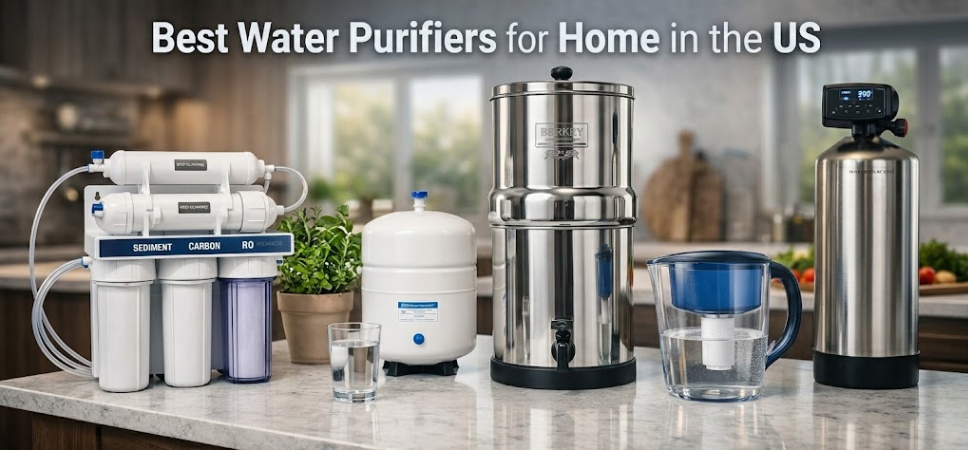
Best Water Purifiers for Home in the US
Access to clean, purified drinking water is one of the most important investments for a healthy household. Although municipal water systems in the United States undergo treatment, contaminants such as chlorine, heavy metals, pesticides, PFAS chemicals, microplastics, and bacteria can still remain in tap water. Because of this, modern households are increasingly adopting high-performance water purification systems to guarantee the highest level of water safety.
In this comprehensive guide, we examine the best water purifiers for homes in the US, comparing their filtration technology, purification efficiency, durability, cost, and performance. This guide will help homeowners select the most reliable water filtration system for drinking, cooking, and everyday use.
Why Every Home in the US Needs a Water Purifier
Water treatment plants remove many impurities, but several contaminants may still reach household taps through pipelines or environmental exposure. A home water purifier ensures that your family receives safe, great-tasting, contaminant-free water every day.
Common Contaminants Found in Tap Water
-
Chlorine and chloramine
-
Lead and heavy metals
-
Pesticides and herbicides
-
Fluoride
-
Bacteria and viruses
-
PFAS “forever chemicals”
-
Microplastics
-
Sediment and rust from pipelines
A high-quality purification system removes these contaminants while preserving essential minerals that improve taste and hydration quality.
Types of Water Purification Systems for Homes
Understanding the different technologies used in water filtration systems helps homeowners choose the most suitable purifier.
Reverse Osmosis (RO) Water Purifiers
Reverse Osmosis systems are widely regarded as one of the most powerful filtration technologies available. RO purifiers use a semi-permeable membrane to remove up to 99% of dissolved contaminants.
Advantages
-
Removes lead, arsenic, nitrates, fluoride
-
Highly effective against chemicals and heavy metals
-
Produces extremely clean drinking water
Considerations
-
Slightly slower filtration speed
-
Requires installation under the sink
Activated Carbon Filters
Activated carbon filtration systems are commonly used in pitcher filters and faucet-mounted purifiers.
Benefits
-
Removes chlorine, odor, and taste
-
Affordable and easy to install
-
No electricity required
Limitations
-
Less effective against dissolved heavy metals
-
Filter cartridges require regular replacement
UV Water Purifiers
Ultraviolet purification technology destroys bacteria, viruses, and microorganisms using UV light radiation.
Benefits
-
Chemical-free purification
-
Highly effective against pathogens
-
Maintains mineral balance
Limitations
-
Does not remove dissolved solids or chemicals
Whole House Water Filtration Systems
These systems treat water at the point where it enters the home, ensuring every faucet provides filtered water.
Benefits
-
Protects plumbing and appliances
-
Removes sediment and chlorine
-
Ideal for larger households
Best Water Purifiers for Home in the US (Top Picks 2026)
Below are some of the most trusted and high-performing water purifiers available in the US market today.
1. Aquasana OptimH2O Reverse Osmosis System
Best Overall Water Purifier for US Homes
Aquasana has become a leading brand in residential water filtration, offering advanced Claryum filtration technology combined with reverse osmosis purification.
Key Features
-
3-stage filtration system
-
Removes fluoride, lead, chlorine, arsenic
-
Remineralization stage improves taste
-
NSF certified performance
Specifications
| Feature | Details |
|---|---|
| Filtration Technology | Reverse Osmosis + Carbon |
| Contaminants Removed | 88+ |
| Filter Life | 6–12 months |
| Installation | Under sink |
| Certification | NSF/ANSI |
Why It Stands Out
This purifier offers extremely high contaminant removal rates while preserving healthy minerals, making it a perfect solution for families prioritizing pure, great-tasting drinking water.
2. APEC ROES-50 Reverse Osmosis Water Filter
Best Value Reverse Osmosis Water Purifier
The APEC ROES-50 is a highly reliable 5-stage filtration system designed for homeowners seeking powerful purification without excessive cost.
Key Benefits
-
Removes lead, chlorine, fluoride, arsenic
-
Built with premium long-lasting filters
-
Leak-free quick-connect fittings
Specifications
| Feature | Details |
|---|---|
| Filtration Stages | 5 |
| Water Production | 50 gallons/day |
| Filter Replacement | 6–12 months |
| Certification | WQA |
Why Homeowners Choose It
The APEC system provides professional-grade water purification at an affordable price, making it one of the best RO water filters in the United States.
3. iSpring RCC7AK Reverse Osmosis System
Best RO Water Purifier With Alkaline Remineralization
The iSpring RCC7AK enhances purified water by adding beneficial minerals such as calcium and magnesium after filtration.
Key Features
-
6-stage purification
-
Alkaline mineral restoration
-
Removes over 1,000 contaminants
-
High durability filters
Specifications
| Feature | Details |
|---|---|
| Filtration Stages | 6 |
| Production Rate | 75 gallons/day |
| Filter Life | 6–12 months |
| Installation | Under sink |
Why It’s Popular
This purifier delivers balanced, mineral-rich drinking water while maintaining powerful contaminant removal.
4. Berkey Gravity Water Filter System
Best Non-Electric Water Purifier
The Berkey gravity system is widely known for its extremely powerful gravity-fed filtration technology.
Benefits
-
No plumbing required
-
Removes 99.9% of bacteria and viruses
-
Excellent for emergency preparedness
-
Portable and durable
Specifications
| Feature | Details |
|---|---|
| Filtration Type | Gravity Carbon |
| Capacity | 2.25 gallons |
| Power Required | None |
| Filter Life | Up to 3,000 gallons |
Why It’s Unique
Berkey filters offer extremely powerful purification without electricity, making them perfect for homes, cabins, and off-grid environments.
5. Brita Elite Water Filter Pitcher
Best Budget Water Purifier for Apartments
Brita remains one of the most recognizable water filtration brands in the United States, offering simple pitcher filters that significantly improve tap water quality.
Key Benefits
-
Removes lead and chlorine
-
Extremely affordable
-
Easy cartridge replacement
-
No installation required
Specifications
| Feature | Details |
|---|---|
| Filtration Type | Activated Carbon |
| Capacity | 10 cups |
| Filter Life | 120 gallons |
| Installation | None |
Why It’s Ideal
Perfect for small households, renters, and dorm rooms, the Brita pitcher provides quick, convenient water filtration.
Key Factors to Consider When Buying a Water Purifier
Selecting the right water purifier depends on several important factors.
1. Filtration Technology
Choose systems capable of removing contaminants common in your area.
-
Reverse Osmosis – best for heavy metals and chemicals
-
Carbon Filters – best for taste and odor
-
UV Filters – best for bacteria
2. Water Contamination Level
Homeowners should review their local water quality report to determine contamination levels.
Key contaminants to evaluate include:
-
Lead
-
Chlorine
-
Fluoride
-
PFAS
-
Bacteria
3. Installation Requirements
Water purifiers can be installed in several ways:
-
Under-sink systems
-
Countertop units
-
Pitcher filters
-
Whole house filtration systems
4. Filter Replacement Cost
Filter replacement is an ongoing cost that should be considered.
Typical replacement intervals:
-
Carbon filters: 2–6 months
-
RO membranes: 2–3 years
-
Sediment filters: 6 months
Benefits of Installing a Home Water Purifier
Health Protection
Filtered water reduces exposure to toxic chemicals and pathogens.
Better Taste and Odor
Removing chlorine and impurities dramatically improves drinking water taste.
Cost Savings
Filtered tap water costs significantly less than bottled water purchases.
Environmental Benefits
Using a water purifier helps reduce plastic bottle waste.
Whole House vs Point-of-Use Water Filters
| Feature | Whole House System | Under Sink Filter |
|---|---|---|
| Coverage | Entire home | Single faucet |
| Installation | Professional | DIY possible |
| Cost | Higher | Moderate |
| Water Quality | Moderate purification | Maximum drinking quality |
For most households, combining a whole house filter with an under-sink RO system provides the best protection.
Maintenance Tips for Water Purifiers
Maintaining a purifier ensures consistent performance.
Important Maintenance Practices
-
Replace filters on schedule
-
Sanitize storage tanks annually
-
Inspect connections for leaks
-
Monitor water pressure and flow
Regular maintenance guarantees long-term filtration performance and safe drinking water.
FAQs
1. What is the best water purifier for home use in the US?
Reverse osmosis systems such as Aquasana OptimH2O and APEC ROES-50 are among the most effective.
2. Do water purifiers remove lead?
Yes, RO systems and advanced carbon filters remove lead effectively.
3. Are reverse osmosis filters safe?
Yes, they remove harmful contaminants while producing high-purity drinking water.
4. How often should water filters be replaced?
Most filters require replacement every 6–12 months.
5. Can water purifiers remove bacteria?
Yes, especially UV purifiers and RO systems.
6. Are pitcher water filters effective?
They improve taste and remove chlorine but are less powerful than RO systems.
7. Do water purifiers remove fluoride?
Reverse osmosis filters remove 90–95% of fluoride.
8. What is PFAS in drinking water?
PFAS are industrial chemicals linked to health risks.
9. Is filtered water better than bottled water?
Yes, filtered water is more affordable and environmentally friendly.
10. Do water purifiers remove microplastics?
Advanced filtration systems remove microplastics effectively.
11. What size water purifier is best for families?
Systems producing 50–75 gallons per day are suitable.
12. Do whole house filters remove chlorine?
Yes, they remove chlorine from all household water sources.
13. Can water filters improve taste?
Activated carbon filters significantly improve taste.
14. Are gravity water filters reliable?
Yes, high-quality gravity filters offer excellent purification.
15. Do water purifiers waste water?
RO systems produce some wastewater during filtration.
16. Are alkaline water systems useful?
They add minerals for balanced pH drinking water.
17. What contaminants should I test for?
Lead, chlorine, PFAS, nitrates, and bacteria.
18. Do water purifiers require electricity?
Only UV systems require power.
19. Are countertop filters effective?
Yes, for moderate filtration needs.
20. Can water purifiers remove pesticides?
Advanced carbon filters remove many agricultural chemicals.
21. What is the lifespan of RO membranes?
Typically 2–3 years.
22. Are water purifiers expensive to maintain?
Most systems cost $50–$150 annually in filters.
23. Do filters remove minerals?
RO removes minerals, but some systems add them back.
24. Can water purifiers reduce limescale?
Yes, by removing dissolved solids.
25. Are home water filters worth it?
Yes, they provide clean, safe, and great-tasting water for everyday use.
Don’t miss out on these exclusive offers! Head over to Deonus.com today to explore the latest summer and winter deals, perfectly tailored for savvy shoppers like you. From outdoor fun to indoor comfort, we’re here to help you enjoy every moment, no matter the weather.