
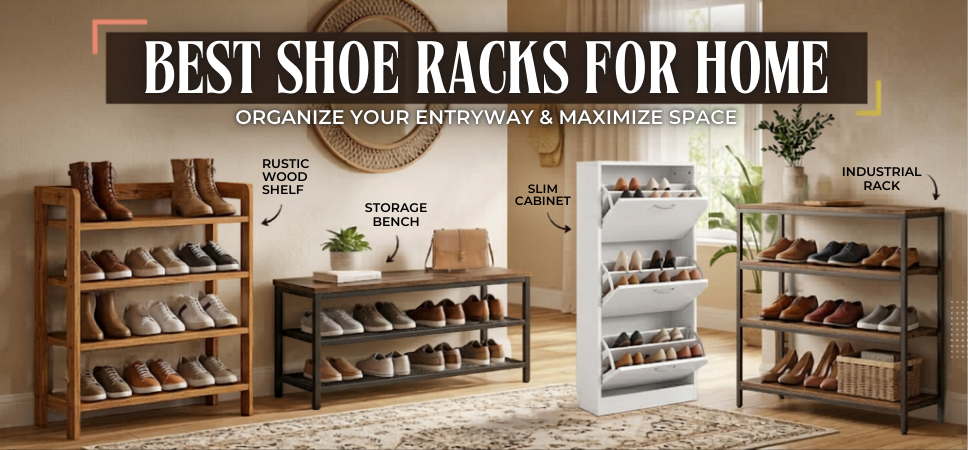
A well-organized home begins with proper storage, and one of the most overlooked yet essential pieces of furniture is the shoe rack. Shoes scattered across entryways, bedrooms, and hallways not only create clutter but also make it difficult to maintain cleanliness and visual harmony in a home. By investing in the best shoe racks for home, we transform messy spaces into structured, aesthetically pleasing environments while protecting footwear from damage, dust, and deformation.
In this comprehensive guide, we explore top shoe rack types, materials, storage strategies, design ideas, and expert buying considerations to help create a clean, organized, and elegant shoe storage system for any home.
Why Every Home Needs a Quality Shoe Rack
A thoughtfully chosen shoe storage solution does far more than simply hold footwear. It plays a crucial role in maintaining organization, hygiene, and interior design harmony.
Key Benefits of Using a Shoe Rack
-
Clutter Control: Prevents shoes from piling up in entryways and hallways.
-
Improved Hygiene: Keeps dirt and outdoor debris contained.
-
Extended Shoe Lifespan: Proper storage protects shoes from crushing and dust.
-
Space Optimization: Maximizes vertical and compact areas.
-
Enhanced Interior Design: Adds a decorative and functional furniture element.
With modern homes prioritizing minimalism and efficiency, a high-quality shoe rack becomes an essential component of daily living.
Types of Shoe Racks for Home Organization
Selecting the right shoe rack depends on available space, design preferences, and storage needs. Below are the most popular and effective shoe rack styles.
1. Open Shoe Racks
Open racks are among the most popular shoe storage solutions because of their simplicity, accessibility, and airflow.
Advantages
-
Easy access to shoes
-
Good ventilation prevents odor
-
Affordable and widely available
-
Works well in entryways and closets
Best For
-
Families with many frequently used shoes
-
Entryway placement
-
Quick grab-and-go footwear access
Many homeowners prefer multi-tier open shoe racks that can store 10–30 pairs of shoes while occupying minimal floor space.
2. Closed Shoe Cabinets
Closed cabinets offer a sleek and clutter-free look while hiding shoes behind doors or drawers.
Advantages
-
Keeps shoes hidden from view
-
Protects footwear from dust
-
Complements modern home décor
-
Adds furniture-like elegance
Best For
-
Living rooms or hallways
-
Minimalist interiors
-
Homes with limited open storage
Modern cabinets often include tilt-out compartments, maximizing capacity while maintaining a slim profile.
3. Stackable Shoe Racks
Stackable racks provide modular storage flexibility, allowing homeowners to expand storage capacity vertically.
Advantages
-
Customizable height and width
-
Affordable storage expansion
-
Easy assembly
-
Ideal for closets
Best For
-
Growing shoe collections
-
Small apartments
-
Adjustable storage systems
Stackable designs are especially useful in compact urban homes where every inch matters.
4. Shoe Benches with Storage
A shoe bench combines seating and storage, making it perfect for entryways and mudrooms.
Advantages
-
Provides seating while wearing shoes
-
Adds aesthetic value
-
Hidden compartments for storage
-
Multi-functional furniture piece
Best For
-
Entryways
-
Family homes
-
Mudrooms
These benches often include cushioned seating with lower shelves or hidden compartments for shoes and accessories.
5. Over-the-Door Shoe Organizers
For extremely tight spaces, over-the-door organizers provide an efficient storage solution.
Advantages
-
Uses unused door space
-
Lightweight and portable
-
Easy installation
-
Ideal for renters
Best For
-
Small apartments
-
Dorm rooms
-
Minimalist homes
These organizers can store 15–40 pairs of shoes depending on design.
Best Materials for Durable Shoe Racks
The material of a shoe rack determines its durability, aesthetics, and maintenance requirements.
1. Wooden Shoe Racks
Wood offers a classic, durable, and premium look.
Advantages
-
Long-lasting durability
-
Elegant furniture appearance
-
Strong weight capacity
-
Matches traditional and modern décor
Solid wood racks are ideal for homeowners seeking luxury storage furniture.
2. Metal Shoe Racks
Metal racks are known for their strength, durability, and industrial design appeal.
Advantages
-
Rust-resistant coatings available
-
Lightweight yet strong
-
Minimal maintenance
-
Excellent ventilation
These racks work well in modern, industrial, and minimalist homes.
3. Plastic Shoe Racks
Plastic racks provide affordable and lightweight storage solutions.
Advantages
-
Budget-friendly
-
Waterproof and easy to clean
-
Lightweight and portable
-
Available in modular designs
They are especially suitable for temporary storage or rental homes.
4. Fabric Shoe Storage Units
Fabric shoe racks are portable and collapsible, ideal for flexible storage needs.
Advantages
-
Dust protection
-
Foldable design
-
Lightweight
-
Cost-effective
These racks are common in closets or temporary living spaces.
Top Shoe Rack Designs for Modern Homes
Modern homes demand functionality combined with style. Several innovative shoe rack designs have emerged to meet these needs.
Minimalist Vertical Shoe Towers
Vertical towers are perfect for compact apartments, utilizing height instead of floor area.
Features include:
-
Narrow footprint
-
High storage capacity
-
Contemporary design
Rotating Shoe Racks
Rotating racks provide 360-degree access to shoes, making them both functional and visually striking.
Advantages:
-
Easy access to every pair
-
Efficient use of space
-
Ideal for large shoe collections
Under-Bed Shoe Storage
Under-bed racks utilize unused bedroom space.
Benefits:
-
Hidden storage
-
Ideal for seasonal footwear
-
Keeps bedrooms clutter-free
Wall-Mounted Shoe Racks
Wall racks create a floating storage system, making rooms appear more spacious.
Advantages:
-
Saves floor space
-
Modern appearance
-
Easy cleaning underneath
How to Choose the Best Shoe Rack for Your Home
Selecting the ideal shoe rack requires careful consideration of several factors.
1. Storage Capacity
Evaluate the number of shoes owned by the household.
| Household Size | Recommended Shoe Rack Capacity |
|---|---|
| Single person | 10–15 pairs |
| Couple | 20–30 pairs |
| Family | 40+ pairs |
A larger family benefits from expandable or modular racks.
2. Available Space
Measure the entryway, closet, or hallway area before purchasing.
Consider:
-
Height clearance
-
Door swing space
-
Walking area
Space-saving designs are ideal for apartments and smaller homes.
3. Design Compatibility
A shoe rack should blend seamlessly with interior décor.
Popular styles include:
-
Scandinavian minimalist racks
-
Rustic wooden cabinets
-
Modern metal storage units
Matching furniture ensures visual harmony within the room.
4. Ventilation and Hygiene
Proper ventilation prevents odor buildup and moisture damage.
Look for:
-
Slatted shelves
-
Breathable compartments
-
Open-air designs
5. Durability and Build Quality
A good shoe rack should support heavy footwear like boots and sneakers.
Important features:
-
Strong joints
-
Rust-proof materials
-
Reinforced shelves
Creative Shoe Storage Ideas for Stylish Homes
Beyond traditional racks, several innovative storage ideas can enhance organization.
1. Entryway Shoe Wall
Install vertical shelves to create a shoe display wall.
2. Hidden Cabinet Drawers
Built-in drawers hide footwear within furniture.
3. Staircase Storage
Utilize space beneath stairs for custom shoe racks.
4. Closet Shoe Dividers
Use partitioned shelves for organized footwear rows.
5. Decorative Shoe Displays
Turn high-end footwear into visual décor elements.
Maintenance Tips for Long-Lasting Shoe Racks
Proper care ensures that shoe racks remain clean, durable, and odor-free.
Maintenance Checklist
-
Clean shelves weekly
-
Remove dust and dirt
-
Air out shoes regularly
-
Avoid overloading racks
-
Use odor-absorbing sachets
These habits help maintain a fresh and organized footwear storage system.
Best Places to Install Shoe Racks in a Home
Strategic placement improves both convenience and aesthetics.
Ideal Locations
-
Entryway or foyer
-
Bedroom closet
-
Mudroom
-
Under staircase
-
Hallway corners
Each location should allow easy access while maintaining neatness.
Common Mistakes to Avoid When Buying Shoe Racks
Avoid these mistakes to ensure maximum storage efficiency.
1. Buying Too Small
Underestimating shoe collection size leads to clutter.
2. Ignoring Shoe Types
Boots and high heels require specialized storage.
3. Choosing Poor Materials
Weak racks may collapse under heavy shoes.
4. Neglecting Ventilation
Closed racks without airflow cause odors.
5. Ignoring Interior Style
Storage furniture should complement the home décor.
Benefits of Organized Shoe Storage
An organized shoe rack contributes to better daily routines and household efficiency.
Advantages
-
Faster shoe selection
-
Cleaner entryways
-
Reduced household stress
-
Improved interior appearance
-
Longer shoe lifespan
A structured storage system ultimately creates a calmer, more welcoming home environment.
Future Trends in Shoe Rack Design
Interior design trends continue to evolve, introducing innovative storage solutions.
Emerging Trends
-
Smart shoe cabinets with ventilation systems
-
Modular customizable racks
-
Sustainable bamboo storage furniture
-
Hidden storage integration
-
Rotating display racks
These designs combine technology, sustainability, and space efficiency.
FAQs
1. What is the best shoe rack for small homes?
Vertical or wall-mounted racks are best for compact homes.
2. How many pairs can a shoe rack hold?
Depending on design, racks hold 10 to 50 pairs.
3. Are closed shoe cabinets better than open racks?
Closed cabinets hide clutter, while open racks provide ventilation.
4. Which material is best for shoe racks?
Solid wood and metal offer the best durability.
5. How do I prevent shoe odor in racks?
Use baking soda sachets or charcoal odor absorbers.
6. Can shoe racks be placed in bedrooms?
Yes, especially inside closets or near wardrobes.
7. What is the ideal height for a shoe rack?
Typically 3–5 tiers, depending on space.
8. Are rotating shoe racks worth it?
Yes, they maximize storage and provide easy access.
9. How do I store boots properly?
Use tall compartments or boot shapers.
10. Can shoe racks be used for other storage?
Yes, they can store bags, accessories, and sports gear.
11. Are plastic shoe racks durable?
They are lightweight but less durable than wood or metal.
12. How often should shoe racks be cleaned?
At least once a week.
13. Can I build a DIY shoe rack?
Yes, wood pallets and shelves can create simple racks.
14. Are shoe racks suitable for outdoor areas?
Metal racks with rust protection are suitable.
15. What is the best rack for large families?
Large modular or cabinet shoe racks.
16. Can shoe racks improve home organization?
Yes, they eliminate clutter effectively.
17. Are wall-mounted racks safe?
Yes, when installed with strong anchors.
18. How much space should be left between shelves?
Around 7–10 inches.
19. Are shoe benches practical?
Yes, they combine seating and storage.
20. Do shoe racks prevent dust?
Closed cabinets do.
21. How long do wooden shoe racks last?
High-quality racks last 10+ years.
22. Are modular shoe racks expandable?
Yes, many designs allow expansion.
23. Can shoe racks be decorative?
Modern racks double as stylish furniture.
24. Should shoe racks be ventilated?
Yes, airflow prevents moisture buildup.
25. What size shoe rack should I buy?
Choose based on current shoes plus future purchases.
For more information and to start using Deonus.com, visit our official website and download the app to stay updated on the best deals and offers. With Deonus.com, you can ensure that every shopping experience is not just an opportunity to shop but an opportunity to save big