
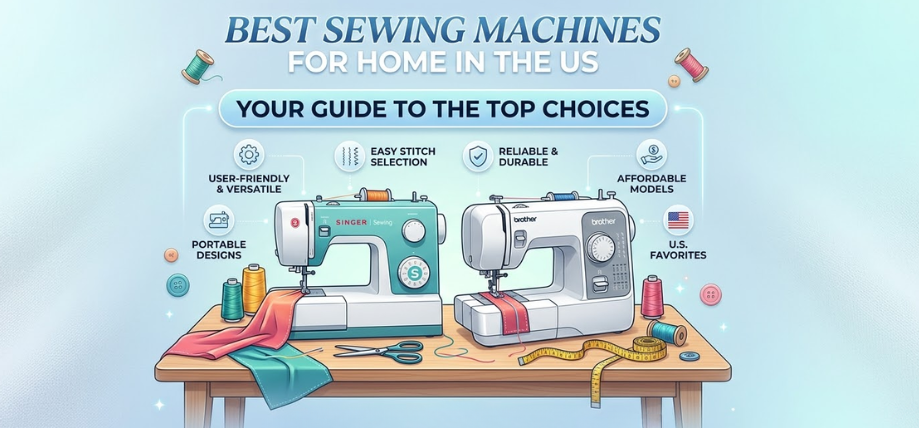
Sewing at home has become more than a hobby—it is now a creative skill, a practical life tool, and even a profitable side business for many households. Whether you want to repair clothes, design garments, create crafts, or start a home-based tailoring business, choosing the best sewing machine for home use is essential.
In this comprehensive guide, we explore the top sewing machines for beginners, intermediate users, and professionals, along with detailed insights into features, benefits, comparisons, and buying tips. Our goal is to help you confidently choose a high-performance sewing machine that delivers precision, durability, and ease of use.
Why Every Home Needs a Sewing Machine
A sewing machine is one of the most versatile household tools you can own. It empowers you to repair garments, customize fashion pieces, and create unique handmade items.
Key Benefits of Owning a Sewing Machine
-
Cost savings from repairing clothes instead of replacing them
-
Ability to customize clothing and home décor
-
Opportunity to start a small tailoring or craft business
-
Perfect for DIY projects and creative expression
-
Faster and more accurate than hand sewing
With modern technology, today's machines include automatic threading, hundreds of stitch patterns, computerized controls, and speed adjustments, making them ideal for beginners and professionals alike.
Types of Sewing Machines for Home Use
Understanding the different types of machines helps you choose the one best suited to your needs.
1. Mechanical Sewing Machines
Mechanical sewing machines are manual machines operated with knobs and dials.
Advantages
-
Simple operation
-
Budget friendly
-
Durable and long lasting
-
Ideal for beginners
Best for: Basic stitching, repairs, and simple projects.
2. Electronic Sewing Machines
Electronic machines provide advanced control with automated features.
Advantages
-
Speed control
-
Automatic needle positioning
-
Multiple stitch patterns
-
Improved precision
Best for: Intermediate users and frequent sewing.
3. Computerized Sewing Machines
Computerized machines are the most advanced models available for home sewing.
Advantages
-
LCD display controls
-
Hundreds of built-in stitches
-
Automatic thread cutting
-
Programmable patterns
Best for: Fashion design, quilting, embroidery, and professional sewing.
Top Features to Look for in the Best Home Sewing Machine
When choosing a sewing machine, several features significantly affect performance and ease of use.
1. Built-In Stitch Patterns
A good machine should offer multiple stitch options including:
-
Straight stitch
-
Zigzag stitch
-
Decorative stitches
-
Buttonhole stitches
Machines with 50+ stitches provide greater versatility.
2. Automatic Needle Threader
Threading needles can be frustrating for beginners. A built-in automatic needle threader saves time and effort.
3. Adjustable Stitch Length and Width
This feature allows precise control over seam strength and design, especially when working with different fabrics.
4. Speed Control
Adjustable speed helps beginners sew safely while allowing professionals to sew quickly and efficiently.
5. Durable Motor and Frame
Look for machines with metal frames and powerful motors, which ensure stability and longevity.
Best Sewing Machines for Home Use
Below are some of the most reliable and highly recommended sewing machines for home users.
1. Brother CS7000X Computerized Sewing Machine
Key Highlights
-
70 built-in stitches
-
LCD display
-
Automatic needle threader
-
Wide table for quilting
Why It Stands Out
This model is considered one of the best sewing machines for beginners and experienced users. Its user-friendly interface, versatile stitch options, and reliable performance make it a top choice.
2. Singer Heavy Duty 4452 Sewing Machine
Key Highlights
-
Powerful motor
-
1,100 stitches per minute
-
Heavy-duty metal frame
-
Perfect for thick fabrics
Why It Stands Out
This machine is designed for denim, leather, and heavy materials, making it perfect for demanding sewing tasks.
3. Janome 2212 Sewing Machine
Key Highlights
-
12 built-in stitches
-
Four-step buttonhole
-
Simple mechanical operation
Why It Stands Out
The Janome 2212 is perfect for beginners who want a reliable, easy-to-learn machine.
4. Brother XM2701 Lightweight Sewing Machine
Key Highlights
-
27 stitches
-
Automatic needle threader
-
Lightweight and portable
Why It Stands Out
Ideal for beginners and hobbyists who want a compact and affordable sewing machine.
5. Singer Quantum Stylist 9960
Key Highlights
-
600 built-in stitches
-
Automatic thread cutter
-
LCD screen
Why It Stands Out
This machine is ideal for advanced sewing projects, quilting, and decorative stitching.
Comparison Table of the Best Sewing Machines for Home
| Sewing Machine | Type | Built-in Stitches | Best For | Key Feature |
|---|---|---|---|---|
| Brother CS7000X | Computerized | 70 | Beginners & intermediate | LCD display |
| Singer 4452 | Mechanical | 32 | Heavy fabrics | Powerful motor |
| Janome 2212 | Mechanical | 12 | Beginners | Simple controls |
| Brother XM2701 | Mechanical | 27 | Home use | Lightweight |
| Singer 9960 | Computerized | 600 | Advanced users | Automatic thread cutter |
How to Choose the Right Sewing Machine for Your Needs
Selecting the right machine depends on your skill level, sewing goals, and budget.
For Beginners
Choose machines that offer:
-
Automatic threading
-
Simple controls
-
Basic stitch patterns
For Hobbyists
Look for machines with:
-
Decorative stitches
-
Adjustable speed
-
Strong motor
For Professionals
Consider machines with:
-
Computerized features
-
Large stitch libraries
-
Quilting and embroidery capabilities
Essential Accessories for Sewing Machines
Accessories enhance the performance and versatility of your machine.
Must-Have Sewing Accessories
-
Extra needles
-
Bobbins
-
Fabric scissors
-
Seam ripper
-
Measuring tape
-
Presser feet
These tools help ensure professional-quality sewing results.
Maintenance Tips for Sewing Machines
Regular maintenance ensures smooth operation and longer lifespan.
Proper Sewing Machine Care
-
Clean lint from the bobbin area regularly
-
Oil moving parts if recommended by the manufacturer
-
Replace needles frequently
-
Store the machine in a dust-free cover
-
Use high-quality thread
Well-maintained machines deliver consistent stitches and fewer mechanical issues.
Common Sewing Mistakes Beginners Should Avoid
Even with the best sewing machine, beginners often encounter mistakes.
Typical Sewing Errors
-
Using the wrong needle type
-
Incorrect thread tension
-
Pulling fabric while sewing
-
Not securing stitches at the beginning and end
-
Skipping machine maintenance
Avoiding these mistakes helps achieve professional sewing results at home.
Advantages of Computerized Sewing Machines
Modern sewing machines are transforming home sewing.
Key Advantages
-
Automated stitch selection
-
Memory settings for patterns
-
Built-in embroidery functions
-
Faster and more accurate sewing
These machines enable high-precision stitching and complex designs with minimal effort.
Best Fabrics to Use with Home Sewing Machines
Different sewing machines handle fabrics differently.
Common Fabrics
| Fabric | Difficulty | Recommended Machine |
|---|---|---|
| Cotton | Easy | Any sewing machine |
| Linen | Moderate | Mechanical or electronic |
| Denim | Difficult | Heavy-duty machine |
| Silk | Delicate | Computerized machine |
| Leather | Very difficult | Heavy-duty machine |
Why Sewing Is Becoming Popular Again
Sewing has experienced a major resurgence worldwide due to several trends.
Reasons for the Sewing Revival
-
Growth of DIY fashion and crafts
-
Increasing interest in sustainable clothing
-
Demand for custom garments
-
Popularity of handmade products on marketplaces
Home sewing is now both a creative hobby and a profitable skill.
25 FAQs
1. What is the best sewing machine for beginners?
Brother XM2701 is widely considered one of the best beginner sewing machines.
2. How much should a good sewing machine cost?
A quality home sewing machine typically costs $100 to $600.
3. Are computerized sewing machines better?
Yes, they offer advanced automation and more stitch options.
4. Can beginners use heavy-duty sewing machines?
Yes, but they may have more power than necessary for basic projects.
5. What sewing machine brand is most reliable?
Popular reliable brands include Brother, Singer, and Janome.
6. How long do sewing machines last?
With proper maintenance, machines can last 10 to 25 years.
7. What is the easiest sewing machine to use?
Mechanical machines with simple stitch controls are easiest.
8. Can sewing machines sew denim?
Yes, but heavy-duty machines perform best.
9. Do sewing machines need oil?
Some models require regular oiling for smooth operation.
10. What thread should I use?
High-quality polyester thread works for most fabrics.
11. What is stitch length?
It controls the distance between stitches.
12. What is stitch width?
It determines how wide decorative stitches appear.
13. Can sewing machines sew leather?
Yes, with special needles and heavy-duty machines.
14. What is a bobbin?
A bobbin holds the lower thread used in stitching.
15. How often should I replace needles?
After 8 hours of sewing or each project.
16. Are portable sewing machines good?
Yes, they are great for small spaces and travel.
17. What is a presser foot?
It holds fabric in place while sewing.
18. Do sewing machines come with warranties?
Most machines include 1 to 25-year warranties.
19. Can sewing machines embroider?
Some computerized machines include embroidery functions.
20. What is reverse stitching?
It secures seams by sewing backwards.
21. Are sewing machines noisy?
Modern machines are quiet and smooth.
22. Can children use sewing machines?
Yes, with supervision and beginner machines.
23. How heavy is a sewing machine?
Most machines weigh 5 to 20 pounds.
24. What is the fastest sewing machine speed?
Some machines sew 1,100 stitches per minute.
25. Are expensive sewing machines worth it?
Yes, they offer better durability, features, and precision.
For more information and to start using Deonus.com, visit our official website and download the app to stay updated on the best deals and offers. With Deonus.com, you can ensure that every shopping experience is not just an opportunity to shop but an opportunity to save big.