
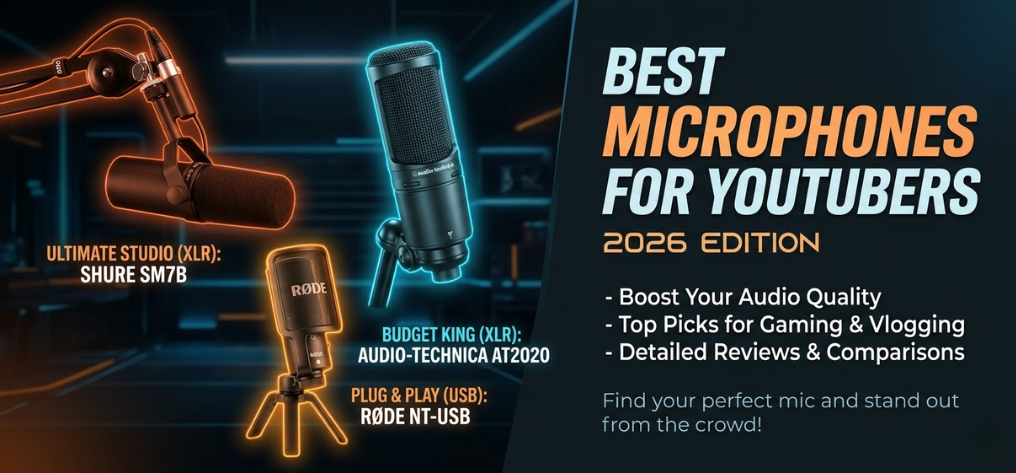
In the world of YouTube content creation, video quality matters, but audio quality determines viewer retention and professionalism. Audiences are more likely to tolerate imperfect visuals than poor sound. For this reason, investing in the best microphones for YouTubers in the US has become essential for creators aiming to produce high-quality videos, podcasts, interviews, tutorials, and live streams.
Modern microphones offer studio-level sound clarity, advanced noise reduction, high sensitivity, and flexible recording options suitable for various YouTube content styles. From USB microphones for beginners to professional XLR studio microphones, the right audio equipment ensures clear, crisp, and engaging recordings.
This comprehensive guide explores the top microphones for YouTubers in the United States, key features to consider, microphone types, and expert recommendations for creating professional audio content.
Why High-Quality Microphones Are Essential for YouTube Creators
Audio quality directly impacts viewer engagement, brand perception, and content credibility. A poor microphone introduces background noise, distortion, and inconsistent volume levels, which can reduce audience trust.
Key Advantages of Professional Microphones
-
Crystal-clear voice recording
-
Reduced background noise
-
Balanced audio frequencies
-
Improved vocal clarity
-
Professional broadcast quality
-
Consistent sound levels
Whether creating vlogs, tutorials, gaming streams, interviews, or educational content, professional microphones dramatically enhance the listening experience.
Top Microphones for YouTubers in the US
1. Shure SM7B – Professional Studio Microphone
The Shure SM7B is widely recognized as one of the best microphones for YouTube creators, podcasters, and broadcasters.
Key Features
-
Dynamic cardioid microphone
-
Professional broadcast-quality audio
-
Advanced electromagnetic shielding
-
Flat, wide-range frequency response
-
Excellent noise rejection
Best Use Cases
-
Podcast recording
-
Voiceovers
-
Studio YouTube videos
-
Professional streaming
The Shure SM7B delivers deep, warm vocal tones with minimal background noise, making it ideal for controlled recording environments.
2. Blue Yeti USB Microphone
The Blue Yeti USB Microphone is one of the most popular microphones among beginner and intermediate YouTubers.
Key Features
-
Plug-and-play USB connection
-
Four recording patterns
-
High-resolution audio capture
-
Integrated headphone monitoring
-
Adjustable gain control
Recording Modes
| Mode | Best For |
|---|---|
| Cardioid | YouTube recording |
| Bidirectional | Interviews |
| Omnidirectional | Group discussions |
| Stereo | Music recording |
This microphone offers exceptional versatility and simplicity, making it ideal for creators starting their YouTube journey.
3. Rode VideoMic Pro+
The Rode VideoMic Pro+ is designed specifically for DSLR and mirrorless camera setups, providing high-quality on-camera audio.
Key Features
-
Supercardioid directional microphone
-
Automatic power function
-
Rechargeable battery
-
Built-in shock mount
-
Advanced noise filtering
Best Applications
-
Outdoor vlogging
-
Travel content
-
Interviews
-
Cinematic YouTube videos
This microphone captures focused sound while minimizing ambient noise, making it ideal for creators filming outside controlled studio environments.
4. Audio-Technica AT2020 USB+
The Audio-Technica AT2020 USB+ offers studio-grade sound with simple USB connectivity, making it a strong choice for content creators.
Key Features
-
High-quality condenser capsule
-
USB plug-and-play functionality
-
Low self-noise
-
Integrated headphone jack
-
High SPL handling
Ideal For
-
Voice recording
-
Tutorials
-
Educational YouTube channels
-
Podcast production
Its clear, detailed audio reproduction ensures professional sound quality without requiring complex audio interfaces.
5. Rode NT1-A Condenser Microphone
The Rode NT1-A is widely known for its exceptionally low noise floor and crystal-clear sound.
Key Features
-
Studio condenser microphone
-
Ultra-low self-noise
-
Wide dynamic range
-
High sensitivity
-
Shock mount included
Best Uses
-
Voiceovers
-
Professional studio recordings
-
YouTube narration
-
Music production
For creators building professional recording studios, the NT1-A provides high-end sound clarity.
6. Shure MV7 USB/XLR Microphone
The Shure MV7 combines USB simplicity with professional XLR connectivity, offering flexibility for creators.
Key Features
-
Dual USB and XLR outputs
-
Voice isolation technology
-
Touch panel controls
-
Real-time monitoring
-
Auto level mode
Why YouTubers Love It
It offers studio-level sound quality with beginner-friendly setup, making it perfect for creators upgrading their audio equipment.
Types of Microphones for YouTube Content Creation
Understanding different microphone types helps creators choose the best microphone for their content style.
Dynamic Microphones
Dynamic microphones are durable and resistant to background noise, making them ideal for untreated rooms.
Advantages
-
Noise rejection
-
Durable design
-
Ideal for speech recording
Best For
-
Podcasts
-
Studio YouTube videos
-
Voice commentary
Condenser Microphones
Condenser microphones capture detailed and sensitive sound, producing highly accurate recordings.
Advantages
-
High sensitivity
-
Rich vocal clarity
-
Wide frequency response
Best For
-
Studio recordings
-
Voiceovers
-
Music content
Lavalier Microphones
Lavalier microphones are small clip-on microphones ideal for on-camera recording.
Advantages
-
Hands-free recording
-
Portable design
-
Discreet appearance
Best For
-
Interviews
-
Educational content
-
Vlogging
Shotgun Microphones
Shotgun microphones capture directional audio, focusing on sound directly in front of the mic.
Advantages
-
Excellent background noise rejection
-
Long recording range
-
Ideal for filmmaking
Best For
-
Outdoor YouTube videos
-
Documentary content
-
Travel vlogs
Important Features to Look for in a YouTube Microphone
Selecting the best microphone requires evaluating technical performance and recording requirements.
1. Polar Pattern
Polar patterns determine how microphones capture sound.
| Polar Pattern | Recording Focus |
|---|---|
| Cardioid | Front-facing sound |
| Omnidirectional | 360-degree audio |
| Bidirectional | Front and back sound |
| Supercardioid | Narrow directional focus |
Cardioid microphones are the most common choice for YouTube recording.
2. Frequency Response
Frequency response indicates the range of sound frequencies a microphone captures.
Professional microphones typically capture 20Hz – 20kHz, ensuring balanced vocal tones.
3. Connectivity Options
Microphones generally support:
-
USB connectivity
-
XLR studio connections
-
Wireless transmission
USB microphones offer simple setup, while XLR microphones provide greater audio control.
4. Built-in Noise Reduction
Advanced microphones include:
-
Noise filtering
-
Pop filters
-
Shock mounts
These features help eliminate unwanted vibrations and background sounds.
Best Microphone Setup for YouTube Studios
Creating a professional recording environment involves combining the right microphone with accessories.
Essential Recording Equipment
-
High-quality microphone
-
Adjustable boom arm
-
Pop filter
-
Shock mount
-
Audio interface
-
Acoustic foam panels
This setup ensures clean, professional audio recordings.
Tips for Achieving Professional Audio Quality
Even the best microphone requires proper recording techniques.
Positioning
Place the microphone 6–12 inches from your mouth.
Use Pop Filters
Pop filters eliminate plosive sounds such as “P” and “B”.
Control Background Noise
Record in a quiet room with minimal echo.
Monitor Audio Levels
Maintain consistent recording volume to avoid distortion.
Common Audio Mistakes YouTubers Should Avoid
Avoid These Errors
-
Recording too far from the microphone
-
Ignoring room acoustics
-
Using incorrect gain settings
-
Skipping pop filters
-
Recording in noisy environments
Correcting these mistakes significantly improves audio clarity and professional quality.
Future Trends in Microphone Technology
Modern microphones are evolving with advanced audio technology.
Upcoming innovations include:
-
AI-powered noise cancellation
-
Smart audio processing
-
Wireless studio microphones
-
Real-time audio enhancement
-
Integrated streaming compatibility
These developments will further improve audio production quality for digital creators.
Conclusion
High-quality audio is one of the most important elements in professional YouTube content creation. The best microphones allow creators to deliver clear, engaging, and immersive audio experiences that enhance viewer satisfaction.
From beginner-friendly USB microphones to advanced studio XLR systems, selecting the right microphone ensures consistent sound quality across videos, podcasts, and live streams.
Investing in the best microphones for YouTubers in the US provides a competitive advantage, improves audience engagement, and helps build a professional content brand.
FAQs – Best Microphones for YouTubers
1. What microphone do most YouTubers use?
Many professional creators use dynamic broadcast microphones or high-quality USB microphones.
2. Are USB microphones good for YouTube?
Yes, they offer simple setup and excellent sound quality.
3. What is the best budget microphone for YouTubers?
USB microphones with cardioid recording patterns provide great value.
4. Are condenser microphones better than dynamic microphones?
Condenser microphones provide more detailed sound, while dynamic microphones reduce noise.
5. Do I need an audio interface for YouTube recording?
Only XLR microphones require an audio interface.
6. What is the ideal microphone distance?
6–12 inches from the mouth.
7. Do microphones reduce background noise?
Directional microphones significantly reduce unwanted sounds.
8. What polar pattern is best for YouTube?
Cardioid.
9. Can I use a microphone with a smartphone?
Yes, with compatible adapters.
10. Do YouTubers use lavalier microphones?
Yes, especially for interviews and presentations.
11. Are shotgun microphones good for YouTube?
Yes, particularly for outdoor recording.
12. What is gain control?
Gain adjusts microphone sensitivity.
13. Are expensive microphones worth it?
Yes, they provide better sound clarity and durability.
14. Do microphones require pop filters?
Pop filters improve vocal recording quality.
15. What microphone is best for gaming YouTube channels?
Dynamic microphones with noise isolation.
16. Can microphones be used for streaming?
Yes, most modern microphones support streaming platforms.
17. How long do microphones last?
Professional microphones can last 10–20 years.
18. Are wireless microphones good for YouTube?
Yes, they are excellent for mobile content creation.
19. What accessories improve audio quality?
Boom arms, pop filters, and acoustic panels.
20. Do microphones require software?
Some models include audio control software.
21. What is a shock mount?
A shock mount reduces vibration noise.
22. Can microphones connect to cameras?
Yes, with compatible audio inputs.
23. Do microphones improve voice clarity?
Yes, professional microphones capture cleaner sound.
24. What recording format is best for YouTube?
High-quality WAV or lossless audio formats.
25. Should beginners buy USB microphones?
Yes, they are simple and beginner-friendly.
For more information and to start using Deonus.com, visit our official website and download the app to stay updated on the best deals and offers. With Deonus.com, you can ensure that every shopping experience is not just an opportunity to shop but an opportunity to save big